Resumo
Definição
História e exame físico
Principais fatores diagnósticos
- presença de fatores de risco
- cefaleia
- rigidez de nuca
- febre
- estado mental alterado
- confusão
- fotofobia
- vômitos
- convulsões
- hipotermia (lactentes)
- irritabilidade (lactentes)
- letargia (lactentes)
- baixa aceitação alimentar (lactentes)
- apneia (lactentes)
- deficit neurológico focal
- movimento ocular anormal
- paralisia facial
- problemas de equilíbrio/deficiência auditiva
- fontanela abaulada em lactentes
Outros fatores diagnósticos
- choro em tom agudo (lactentes)
- erupção cutânea
- papiledema
- sinal de Kernig
- sinal de Brudzinski
Fatores de risco
- ≤5 ou ≥65 anos de idade
- aglomerações
- exposição a patógenos
- lactentes não imunizados
- imunodeficiência
- câncer
- estado de asplenia/hiposplênico
- defeitos anatômicos cranianos
- implantes cocleares
- infecção contígua
- tabagismo
Investigações diagnósticas
Primeiras investigações a serem solicitadas
- contagem celular do líquido cefalorraquidiano (LCR) e diferencial
- proteína do líquido cefalorraquidiano (LCR)
- glicose do líquido cefalorraquidiano (LCR)
- coloração de Gram do líquido cefalorraquidiano (LCR)
- cultura do líquido cefalorraquidiano (LCR)
- detecção de antígeno no líquido cefalorraquidiano (LCR)
- hemocultura
- hemograma completo e diferencial
- proteína C-reativa
- eletrólitos, cálcio (Ca), magnésio (Mg), glicose
- perfil de coagulação (tempo de protrombina, razão normalizada internacional [INR], tempo de tromboplastina parcial [TTP] ativada, fibrinogênio, produtos de degradação da fibrina)
- tomografia computadorizada (TC) do crânio
- reação em cadeia da polimerase
Investigações a serem consideradas
- ressonância nuclear magnética (RNM) de crânio
- Doppler transcraniano
- procalcitonina sérica
Novos exames
- proteína ligante de heparina (PLH)
- testes rápidos de antígeno no líquido cefalorraquidiano (LCR)
- sequenciamento metagenômico de nova geração (mNGS)
Algoritmo de tratamento
≤1 mês de idade e imunocompetente
>1 mês e <50 anos de idade e imunocompetentes
≥50 anos de idade ou imunocomprometido
infecção confirmada: Streptococcus pneumoniae
infecção confirmada: Haemophilus influenzae
infecção confirmada: Streptococcus agalactiae (estreptococos do grupo B)
infecção confirmada: Escherichia coli e outras Enterobacteriaceae Gram-negativas
infecção confirmada: Listeria monocytogenes
infecção confirmada: Staphylococcus aureus
infecção confirmada: Staphylococcus epidermidis
infecção confirmada: Pseudomonas aeruginosa
infecção confirmada: espécies de enterococos
infecção confirmada: espécies de Acinetobacter
infecção confirmada: Neisseria meningitidis
Colaboradores
Autores
Rodrigo Hasbun, MD, MPH
Professor of Medicine
UT Health Mc Govern Medical School
Houston
TX
Declarações
RH has received research support and personal fees from Biomeriaux. RH is an author of references cited in this topic.
Omaima El Tahir, MD
PhD Candidate
Department of Pediatric infectious Diseases and Immunology, AI&II
Amsterdam UMC, Vrije Universiteit Amsterdam
Amsterdam
The Netherlands
Declarações
OET declares that she has no competing interests.
Agradecimentos
Dr Rodrigo Hasbun and Omaima El Tahir would like to gratefully acknowledge Dr Marceline Tutu van Furth, previous contributor to this topic.
Declarações
AMTvF declares that she has no competing interests.
Revisores
Catherine Derber, MD
Professor
Department of Medicine
Eastern Virginia Medical School
Norfolk
VA
Declarações
CD declares that she has no competing interests.
Guy Thwaites, MA, MBBS, PhD, MRCP, FRCPath
Wellcome Trust Clinical Research Fellow
Centre for Molecular Microbiology and Infection
Imperial College London
London
UK
Declarações
GT declares that he has no competing interests.
Créditos aos pareceristas
Os tópicos do BMJ Best Practice são constantemente atualizados, seguindo os desenvolvimentos das evidências e das diretrizes. Os pareceristas aqui listados revisaram o conteúdo pelo menos uma vez durante a história do tópico.
Declarações
As afiliações e declarações dos pareceristas referem--se ao momento da revisão.
Referências
Principais artigos
Hasbun R. Progress and challenges in bacterial meningitis: a review. JAMA. 2022 Dec 6;328(21):2147-54. Resumo
van de Beek D, Cabellos C, Dzupova O, et al. ESCMID guideline: diagnosis and treatment of acute bacterial meningitis. Clin Microbiol Infect. 2016 May;22(suppl 3):S37-62.Texto completo Resumo
Brouwer MC, McIntyre P, Prasad K, et al. Corticosteroids for acute bacterial meningitis. Cochrane Database Syst Rev. 2015 Sep 12;(9):CD004405.Texto completo Resumo
Artigos de referência
Uma lista completa das fontes referenciadas neste tópico está disponível para os usuários com acesso total ao BMJ Best Practice.
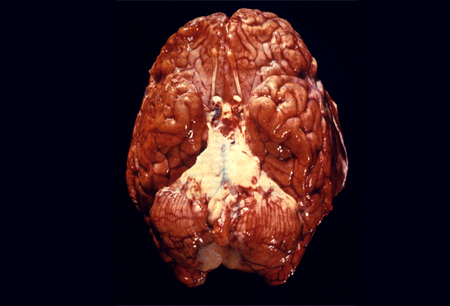
Diagnósticos diferenciais
- Encefalite
- Meningite viral
- Meningite induzida por medicamentos
Mais Diagnósticos diferenciaisDiretrizes
- 2017 Infectious Diseases Society of America's clinical practice guidelines for healthcare-associated ventriculitis and meningitis
- ESCMID guideline: diagnosis and treatment of acute bacterial meningitis
Mais DiretrizesFolhetos informativos para os pacientes
Vacina pneumocócica em bebês e crianças
Punção lombar
Mais Folhetos informativos para os pacientesVideos
Punção lombar diagnóstica em adultos: demonstração animada
Venopunção e flebotomia – Vídeo de demonstração
Mais vídeos Conectar-se ou assinar para acessar todo o BMJ Best Practice
O uso deste conteúdo está sujeito ao nosso aviso legal