Resumo
Definição
História e exame físico
Principais fatores diagnósticos
- presença de fatores de risco
- dor no cotovelo durante ou após a flexão e extensão
- exacerbação da dor com movimento ou atividade ocupacional repetitivos
- redução da força de preensão
- dor na região lateral do cotovelo (epicondilite lateral)
- dor à palpação sobre o tendão extensor comum (epicondilite lateral)
- estiramento positivo do extensor radial curto do carpo (epicondilite lateral)
- dor durante a extensão do punho e dedos contra resistência (epicondilite lateral)
- dor na região medial do cotovelo (epicondilite medial)
- dor à palpação aproximadamente 5 mm distal e lateral ao epicôndilo medial (epicondilite medial)
- dor elevada com flexão do punho ou pronação do antebraço contra resistência (epicondilite medial)
Outros fatores diagnósticos
- amplitude de movimentos normal no cotovelo
- sensibilidade normal
- sinal de Tinel negativo
- extensão fraca do punho (epicondilite lateral)
- edema
Fatores de risco
- aumento da idade (>40 anos)
- história médica de epicondilite
- atividades repetitivas
- mecânica incorreta durante as atividades
- equipamentos inadequados
- condicionamento físico inadequado
- tabagismo
- obesidade
- sintomas ocorrendo no mesmo lado que a mão dominante
- sexo feminino
Investigações diagnósticas
Primeiras investigações a serem solicitadas
- nenhum exame inicial (diagnóstico clínico)
Investigações a serem consideradas
- radiografia do cotovelo
- tomografia computadorizada (TC) do cotovelo
- RNM do cotovelo
- ressonância nuclear magnética (RNM) da coluna cervical
- estudos de eletromiografia e condução nervosa
- ultrassonografia do cotovelo
Algoritmo de tratamento
apresentação inicial
nenhuma resposta ao tratamento inicial em 6 semanas
epicondilite lateral refratária ao tratamento 6 a 12 meses após a apresentação inicial
epicondilite medial refratária ao tratamento 6 a 12 meses após a apresentação inicial
Colaboradores
Autores
Adam C. Watts, BSc, MBBS, FRCS (Tr and Ortho)
Consultant Hand and Upper Limb Surgeon
Wrightington Hospital
Appley Bridge
Wigan
UK
Declarações
ACW has received payment for education from Medartis and Wright Medical. His institution has received funding for research from Chemedica, ZimmerBiomet, Wright Medical, Stryker and Lima.
Paul M. Robinson, FRCS (Tr&Orth), BMedSci, MBChB (Hons)
Consultant Trauma and Orthopaedic Surgeon
Peterborough City Hospital
North West Anglia NHS Foundation Trust
Peterborough
UK
Declarações
PMR declares that he has no competing interests.
Agradecimentos
Dr Adam C. Watts and Dr Paul M. Robinson would like to gratefully acknowledge Dr Len Funk, Dr Iain Macleod, Dr Daniel J. Soloman, and Dr Hugo B. Sanchez, previous contributors to this topic. LF, IM, DJS, and HBS declare that they have no competing interests.
Revisores
Frank G. Alberta, MD, FAAOS
Associate Professor of Orthopaedic Surgery
Hackensack Meridian School of Medicine
Nutley
NJ
Declarações
FGA declares that he has no competing interests.
Créditos aos pareceristas
Os tópicos do BMJ Best Practice são constantemente atualizados, seguindo os desenvolvimentos das evidências e das diretrizes. Os pareceristas aqui listados revisaram o conteúdo pelo menos uma vez durante a história do tópico.
Declarações
As afiliações e declarações dos pareceristas referem--se ao momento da revisão.
Referências
Principais artigos
American College of Radiology. Practice parameter for the performance and interpretation of magnetic resonance imaging (MRI) of the elbow. 2021 [internet publication].Texto completo
Raman J, MacDermid JC, Grewal R. Effectiveness of different methods of resistance exercises in lateral epicondylosis - a systematic review. J Hand Ther. 2012 Jan-Mar;25(1):5-25. Resumo
National Institute for Health and Care Excellence. Autologous blood injection for tendinopathy. Jan 2013 [internet publication].Texto completo
Artigos de referência
Uma lista completa das fontes referenciadas neste tópico está disponível para os usuários com acesso total ao BMJ Best Practice.
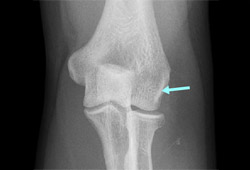
Diagnósticos diferenciais
- Síndrome do túnel radial
- Plica radiocapitelar
- Osteoartrite
Mais Diagnósticos diferenciaisDiretrizes
- ACR Appropriateness Criteria: acute elbow and forearm pain
- Lateral epicondyle tendinopathy (LET) toolkit
Mais DiretrizesFolhetos informativos para os pacientes
Cotovelo de tenista
Mais Folhetos informativos para os pacientes Conectar-se ou assinar para acessar todo o BMJ Best Practice
O uso deste conteúdo está sujeito ao nosso aviso legal