Resumo
Definição
História e exame físico
Principais fatores diagnósticos
- dor epigástrica ou no quadrante superior direito do abdome (com duração >30 minutos)
Outros fatores diagnósticos
- dor pós-prandial
- sensibilidade no quadrante superior direito ou sensibilidade epigástrica
- náuseas
- icterícia
Fatores de risco
- idade mais avançada
- sexo feminino
- Etnia hispânica e indígena norte-americana
- história familiar de cálculos biliares
- mutações genéticas
- níveis elevados de estrogênio e progesterona
- obesidade, diabetes e síndrome metabólica
- doença hepática gordurosa não alcoólica
- jejum prolongado/perda de peso rápida
- nutrição parenteral total
- uso de octreotida
- uso de agonistas do receptor de peptídeo semelhante ao glucagon 1 (GLP-1)
- uso de ceftriaxona
- doença ou ressecção do íleo terminal
- hemoglobinopatia
- cirrose
- fibrose cística
- dieta e estilo de vida
- tabagismo
- infecção da vesícula biliar por Helicobacter pylori
Investigações diagnósticas
Primeras pruebas diagnósticas para solicitar
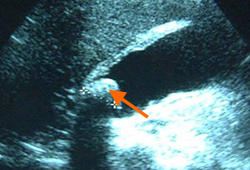
- ultrassonografia abdominal
- testes séricos da função hepática
- Hemograma completo
- lipase e amilase séricas
Pruebas diagnósticas que deben considerarse
- colangiopancreatografia por ressonância magnética
- ultrassonografia endoscópica
- colangiopancreatografia retrógrada endoscópica
- tomografia computadorizada (TC) abdominal
Algoritmo de tratamiento
colelitíase sintomática
coledocolitíase com ou sem sintomas
colelitíase assintomática
Colaboradores
Autores
Eldon Shaffer, MD, FRCPC
Emeritus Professor of Medicine
Division of Gastroenterology
University of Calgary
Calgary
Canada
Divulgaciones
ES declares that he has no competing interests.
Agradecimientos
Professor Eldon Shaffer would like to gratefully acknowledge Dr Vikesh K. Singh and Dr Anthony N. Kalloo, previous contributors to this topic.
გაფრთხილება:
VKS and ANK declare that they have no competing interests.
რეცენზენტები
Timothy B. Gardner, MD
Assistant Professor
Director of Pancreatic Disorders
Section of Gastroenterology
Dartmouth-Hitchcock Medical Center
Lebanon
NH
Disclosures
TBG declares that he has no competing interests.
Ajith Siriwardena, MD, FRCS
Professor of Hepatobiliary Surgery
Manchester Royal Infirmary
Manchester
UK
Disclosures
AS declares that he has no competing interests.
Kurinchi Gurusamy, MBBS, MS, MRCS, MSc
Clinical Research Fellow
Hepatopancreatobiliary and Liver Transplant Surgery
University Department of Surgery
Royal Free Campus
UCL Medical School
London
UK
Disclosures
KG declares that he has no competing interests.
Peer reviewer acknowledgements
BMJ Best Practice topics are updated on a rolling basis in line with developments in evidence and guidance. The peer reviewers listed here have reviewed the content at least once during the history of the topic.
Disclosures
Peer reviewer affiliations and disclosures pertain to the time of the review.
References
Key articles
European Association for the Study of the Liver. EASL clinical practice guidelines on the prevention, diagnosis and treatment of gallstones. J Hepatol. 2016 Jul;65(1):146-81.Full text Abstract
ASGE Standards of Practice Committee; Buxbaum JL, Abbas Fehmi SM, Sultan S, et al. ASGE guideline on the role of endoscopy in the evaluation and management of choledocholithiasis. Gastrointest Endosc. 2019 Jun;89(6):1075-105;e15.Full text Abstract
Fujita N, Yasuda I, Endo I, et al. Evidence-based clinical practice guidelines for cholelithiasis 2021. J Gastroenterol. 2023 Sep;58(9):801-33.Full text Abstract
Reference articles
A full list of sources referenced in this topic is available to users with access to all of BMJ Best Practice.
Diagnósticos diferenciais
- Colecistite acalculosa
- Pancreatite aguda não biliar
- Úlcera péptica (UP)
More DifferentialsDiretrizes
- Evidence-based clinical practice guidelines for cholelithiasis 2021
- ACR appropriateness criteria: right upper quadrant pain
More DiretrizesFolhetos informativos para os pacientes
Cálculos biliares
Cálculos biliares: perguntas a fazer ao seu médico
Mais Folhetos informativos para os pacientes Conectar-se ou assinar para acessar todo o BMJ Best Practice
O uso deste conteúdo está sujeito ao nosso aviso legal