Resumo
Definição
História e exame físico
Principais fatores diagnósticos
- presença de fatores de risco
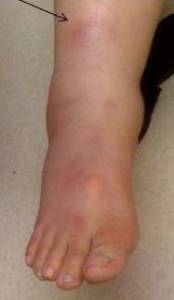
- nódulos nas canelas
- uveíte, olhos vermelhos, nódulos retinianos ou gotas de vela
- nódulos em outras áreas cutâneas
- lesões cutâneas anestésicas
Outros fatores diagnósticos
- dores nas articulações
- febre
- diarreia, constipação, dor abdominal, hematoquezia
- baço aumentado
- nódulos miliares na retina
Fatores de risco
- infecção por estreptococos
- sarcoidose
- tuberculose
- coccidioidomicose
- histoplasmose
- blastomicose
- brucelose
- Doença de Behçet
- contraceptivos orais
- sulfonamidas
- iodetos e medicamentos antiepilépticos
- psitacose
- lepra
- doença inflamatória intestinal
- gestação
- neoplasia maligna
Investigações diagnósticas
Primeiras investigações a serem solicitadas
- Hemograma completo
- título de antiestreptolisina O
- radiografia torácica
- teste tuberculínico, teste de liberação de gamainterferona
Investigações a serem consideradas
- nível sérico de enzima conversora da angiotensina (ECA)
- biópsia de lesão cutânea
- teste cutâneo de coccidioidina
- teste cutâneo de histoplasmina
- teste cutâneo de lepromina
- sorologia para blastomicose
- sorologia para brucelose
- sorologia para psitacose
- raio-x das articulações sintomáticas
- teste do fator reumatoide
- título de aglutinação para Yersinia
- coproculturas para Yersinia
- colonoscopia
- imunoglobulina D (IgD) sérica
- biópsias por punção profunda incluindo gordura subcutânea, ou biópsias incisionais
Algoritmo de tratamento
sintomas leves a moderadamente graves
sintomas refratários graves
Colaboradores
Autores
Daniela Kroshinsky, MD, MPH

Associate Professor of Dermatology
Harvard Medical School
Director of Pediatric Dermatology
Director of Inpatient Dermatology
Massachusetts General Hospital
Boston
MA
Declarações
DK declares that she has no competing interests.
Agradecimentos
Dr Daniela Kroshinsky would like to gratefully acknowledge Dr Om P. Sharma, a previous contributor to this topic. Dr Kroshinsky would also like to thank Priyanka Vedak for her contribution to this topic. We would like to gratefully acknowledge the contribution of the late Elisabeth Higgins (Consultant Dermatologist, King’s College Hospital) for her peer review of this topic.
Declarações
OPS declared that he had no competing interests. PV declared that she had no competing interests. EH declared that she had no competing interests.
Revisores
Robert T. Brodell, MD
Professor of Internal Medicine
Clinical Professor of Dermatopathology
Northeastern Ohio Universities College of Medicine
Warren
Associate Clinical Professor of Dermatology
Case Western Reserve University School of Medicine
Cleveland
OH
Declarações
RTB declares that he has no competing interests.
Créditos aos pareceristas
Os tópicos do BMJ Best Practice são constantemente atualizados, seguindo os desenvolvimentos das evidências e das diretrizes. Os pareceristas aqui listados revisaram o conteúdo pelo menos uma vez durante a história do tópico.
Declarações
As afiliações e declarações dos pareceristas referem--se ao momento da revisão.
Referências
Principais artigos
Bondi EE, Margolis DJ, Lazarus ZS. Panniculitis. In: Freedberg I, Eisen A, Wolff K, et al, eds. Fitzpatrick's dermatology in general medicine. 5th ed. New York, NY: McGraw-Hill; 1999: 1284-6.
Requena L, Requena C. Erythema nodosum (review). Dermatol Online J. 2002 Jun;8(1):4. Resumo
Sterling JB, Heymann WR. Potassium iodide in dermatology: a 19th century drug for the 21st century-uses, pharmacology, adverse effects, and contraindications. J Am Acad Dermatol. 2000 Oct;43(4):691-7. Resumo
Friedman ES, LaNatra N, Stiller MJ. NSAIDs in dermatologic therapy: review and preview. J Cutan Med Surg. 2002 Sep-Oct;6(5):449-59. Resumo
Schultz E, Whiting D. Treatment of erythema nodosum and nodular vasculitis with potassium iodides. Br J Dermatol. 1976 Jan;94(1):75-8. Resumo
Artigos de referência
Uma lista completa das fontes referenciadas neste tópico está disponível para os usuários com acesso total ao BMJ Best Practice.
Diagnósticos diferenciais
- Doença de Weber-Christian
- Deficiência de alfa 1-antitripsina
- Vasculite nodular (eritema induratum ou doença de Bazin)
Mais Diagnósticos diferenciais Conectar-se ou assinar para acessar todo o BMJ Best Practice
O uso deste conteúdo está sujeito ao nosso aviso legal