Resumo
Definição
História e exame físico
Principais fatores diagnósticos
- presença de fatores de risco
- abnormal vaginal bleeding
- sangramento pós-coito
- dorsalgia ou dor pélvica
- dispareunia
- massa cervical
- sangramento cervical
Outros fatores diagnósticos
- corrimento vaginal mucoso ou purulento
- obstrução renal, vesical ou intestinal
- dor óssea
Fatores de risco
- infecção por papilomavírus humano (HPV)
- faixa etária
- Infecção pelo vírus da imunodeficiência humana (HIV)
- início precoce da atividade sexual (menos de 18 anos)
- múltiplos parceiros sexuais
- tabagismo
- imunossupressão
- exposição intrauterina ao dietilestilbestrol
- história de IST
- uso de pílula contraceptiva oral
- elevada paridade
- parceiro masculino incircunciso
- subnutrição de micronutrientes
- folato sérico baixo
- níveis baixos das vitaminas C e E
- uso de bebidas alcoólicas
- condição socioeconômica baixa
Investigações diagnósticas
Primeiras investigações a serem solicitadas
- exame vaginal ou especular
- colposcopia
- biópsia
- teste de papilomavírus humano (HPV)
Investigações a serem consideradas
- Hemograma completo
- teste da função renal
- testes da função hepática
- radiografia torácica
- pielograma intravenoso
- ultrassonografia renal
- sigmoidoscopia/proctoscopia
- cistoscopia
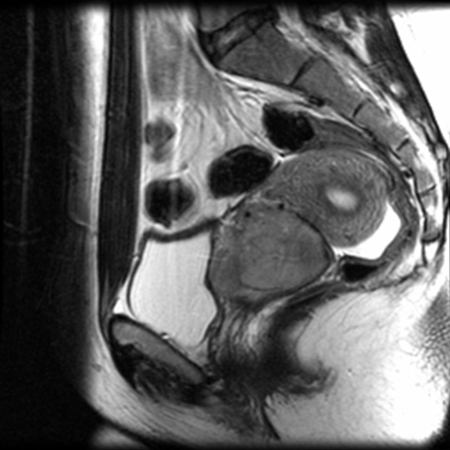
- ressonância nuclear magnética (RNM) da pelve
- PET-CT
- TC do tórax/abdome/pelve
- PET-MRI
- teste molecular
Novos exames
- Expressão de biomarcadores p16 e Ki67
Algoritmo de tratamento
não gestante em estádio IA1 sem IELV: com desejo de manter a fertilidade
não gestante em estádio IA1 sem IELV: sem desejo de manter a fertilidade
não gestante, estádio IA1 com IELV: com desejo de manter a fertilidade
não gestante, estádio IA1 com IELV: sem desejo de manter a fertilidade
não gestante em estádio IA2: com desejo de manter a fertilidade
não gestante em estádio IA2: sem desejo de manter a fertilidade
não gestante em estádio IB1: com desejo de manter a fertilidade
não gestante em estádio IB1: sem desejo de manter fertilidade
não gestante em estádio IB2: com desejo de manter a fertilidade
não gestante, estádio IB2: sem desejo de manter a fertilidade
não gestante em estádio IIA1
não gestante em estádio IB3 ou IIA2
não gestante em estádio IIB a IVA
não gestante, estádio IVB (doença metastática)
não gestante, doença recorrente local ou regional
gestante
Colaboradores
Autores
Richard T. Penson, MD, MRCP

Medical Gynecologic Oncologist
Division of Hematology Oncology
Massachusetts General Hospital
Boston, MA
Declarações
RTP reports serving on scientific advisory boards for Aadi Bioscience, AstraZeneca, GSK Inc., ImmunoGen Inc., Merck & Co., Roche Pharma, Sutro Biopharma, Tubulis GmbH; and serves on or chairs data and safety monitoring boards for AstraZeneca, EQRx, and Roche Pharma. RTP receives institutional research funding (as Principal Investigator) from 858 Therapeutics; royalties from BMJ Publishing, UptoDate, Elsevier Ltd, Wolters Kluwer Health, and Wiley-Blackwell; and payment for educational events from Research to Practice, ExpertConnect, ReachMD, and CMEO Outfitters.
Andrea L. Russo, MD
Director
Gynecologic Radiation Oncology
Associate Clinical Director
Department of Radiation Oncology
Massachusetts General Hospital
Boston, MA
Declarações
ALR declares that she has no competing interests.
Agradecimentos
Dr Richard T. Penson and Dr Andrea L. Russo would like to gratefully acknowledge Dr Larissa J. Lee, their co-contributor who is sadly deceased, and to acknowledge Dr Neil S. Horowitz and Dr Anthony H. Russell, previous contributors to this topic.
Declarações
NSH and AHR declare that they have no competing interests.
Revisores
Tracilyn Hall, MD
Assistant Professor of Gynecologic Oncology
Dan L Duncan Comprehensive Cancer Center
Baylor College of Medicine Houston
Houston, TX
Declarações
TH declares that she has no competing interests.
Linda Yang, MD
Fellow
Minimally Invasive Gynecologic Surgery
Magee Women's Hospital
University of Pittsburgh Medical Center
PA
Declarações
LY declares that she has no competing interests.
Deirdre Lyons, MB, BCh, BAO, MRCOG
Consultant in Obstetrics & Gynaecology
Lead Clinician in Colposcopy
Imperial College Healthcare NHS Trust
London
UK
Declarações
DL declares that she has no competing interests.
Créditos aos pareceristas
Os tópicos do BMJ Best Practice são constantemente atualizados, seguindo os desenvolvimentos das evidências e das diretrizes. Os pareceristas aqui listados revisaram o conteúdo pelo menos uma vez durante a história do tópico.
Declarações
As afiliações e declarações dos pareceristas referem--se ao momento da revisão.
Referências
Principais artigos
Marth C, Landoni F, Mahner S, et al. Cervical cancer: ESMO clinical practice guidelines for diagnosis, treatment and follow-up. Ann Oncol. 2017 Jul 1;28(suppl 4):iv72-83.Texto completo Resumo
Zhou N, Beavis AL, Lin LL, et al. Embracing and implementing the WHO cervical cancer elimination campaign goals: a consensus statement by SGO, ACOG, ASCCP, ASTRO, and ABS on minimum quality care standards for cervical cancer patients in the U.S. Gynecol Oncol. 2025 Sep;200:193-202.Texto completo Resumo
Bhatla N, Aoki D, Sharma DN, et al. Cancer of the cervix uteri: 2025 update. Int J Gynaecol Obstet. 2025 Sep;171 Suppl 1(suppl 1):87-108.Texto completo Resumo
National Comprehensive Cancer Network. NCCN clinical practice guidelines in oncology: cervical cancer [internet publication].Texto completo
Perkins RB, Wolf AMD, Church TR, et al. Self-collected vaginal specimens for human papillomavirus testing and guidance on screening exit: an update to the American Cancer Society cervical cancer screening guideline. CA Cancer J Clin. 2026 Jan-Feb;76(1):e70041.Texto completo Resumo
Artigos de referência
Uma lista completa das fontes referenciadas neste tópico está disponível para os usuários com acesso total ao BMJ Best Practice.
Diagnósticos diferenciais
- Infecção por papilomavírus humano (HPV)
- Infecção pélvica
- Cisto Nabothian
Mais Diagnósticos diferenciaisDiretrizes
- Cervical screening: professional guidance
- Guidelines for the prevention and treatment of opportunistic infections in adults and adolescents with HIV
Mais DiretrizesFolhetos informativos para os pacientes
Câncer cervical
Vacina contra o HPV (papilomavírus humano)
Mais Folhetos informativos para os pacientes Conectar-se ou assinar para acessar todo o BMJ Best Practice
O uso deste conteúdo está sujeito ao nosso aviso legal