Resumo
Definição
História e exame físico
Principais fatores diagnósticos
- presença de fatores de risco
- vertigem
- perda auditiva
- zumbido
- plenitude aural
- quedas súbitas
Outros fatores diagnósticos
- teste de Romberg positivo
- teste de passos de Fukuda
- sintomas bilaterais
- nistagmo
- marcha em tandem
Fatores de risco
- infecção viral recente
- predisposição genética
- doença autoimune
- idade mais avançada
Investigações diagnósticas
Primeiras investigações a serem solicitadas
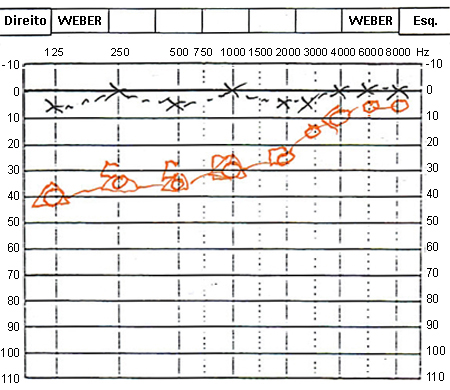
- condução óssea e aérea de tons puros com mascaramento
- audiometria da fala
- timpanometria/imitanciometria/níveis do reflexo do estapédio
- emissões otoacústicas (EOA)
Investigações a serem consideradas
- eletrococleografia
- eletronistagmografia
- teste da cadeira rotatória
- potencial evocado miogênico vestibular (PEMV)
- ressonância nuclear magnética (RNM) dos canais auditivos internos
- testes da função tireoidiana
- doença de Lyme e sorologia para sífilis
- anticorpo antinuclear
- anticorpo anticitoplasma de neutrófilo
- fator reumatoide
Novos exames
- RNM tridimensional
Algoritmo de tratamento
todos os pacientes
perda auditiva persistente
falha das terapias medicamentosa e intratimpânica; audição adequada
falha das terapias medicamentosa e intratimpânica; audição gravemente prejudicada
Colaboradores
Autores
Soha N. Ghossaini, MD, FACS
Otology-Neurotology
Ear Nose and Throat Associates of New York
New York
NY
Declarações
SNG declares that she has no competing interests.
Agradecimentos
Dr Ghossaini would like to gratefully acknowledge the late Professor Maurice H. Miller, a previous contributor to this topic. MHM declared that he had no competing interests.
Revisores
Steven D. Rauch, MD
Associate Professor of Otology and Laryngology
Harvard Medical School
Boston
MA
Declarações
SDR declares that he has no competing interests.
Christopher J. Linstrom, MD
Professor
Otolaryngology/Head and Neck Surgery
The New York Eye and Ear Infirmary
Surgeon Director
New York
NY
Declarações
CJL declares that he has no competing interests.
Peter Rea, MA, BM BCh, FRCS(ORL-HNS)
Consultant ENT Surgeon
Leicester Royal Infirmary
Leicester
UK
Declarações
PR declares that he has no competing interests.
Doris Eva Bamiou, MD, MSc, PhD
Clinical Senior Lecturer & Consultant in Audiovestibular Medicine
Ear Institute
University College London
London
UK
Declarações
DEB declares that she has no competing interests.
Créditos aos pareceristas
Os tópicos do BMJ Best Practice são constantemente atualizados, seguindo os desenvolvimentos das evidências e das diretrizes. Os pareceristas aqui listados revisaram o conteúdo pelo menos uma vez durante a história do tópico.
Declarações
As afiliações e declarações dos pareceristas referem--se ao momento da revisão.
Referências
Principais artigos
Goebel JA. 2015 Equilibrium Committee Amendment to the 1995 AAO-HNS guidelines for the definition of Ménière's disease. Otolaryngol Head Neck Surg. 2016 Mar;154(3):403-4. Resumo
Basura GJ, Adams ME, Monfared A, et al. Clinical practice guideline: Ménière's disease. Otolaryngol Head Neck Surg. 2020 Apr;162(suppl 2):S1-55.Texto completo Resumo
Lopez-Escamez JA, Carey J, Chung WH, et al; Classification Committee of the Barany Society; Japan Society for Equilibrium Research; European Academy of Otology and Neurotology (EAONO); Equilibrium Committee of the American Academy of Otolaryngology-Head and Neck Surgery (AAO-HNS); Korean Balance Society. Diagnostic criteria for Menière's disease. J Vestib Res. 2015;25(1):1-7.Texto completo Resumo
Artigos de referência
Uma lista completa das fontes referenciadas neste tópico está disponível para os usuários com acesso total ao BMJ Best Practice.
Diagnósticos diferenciais
- Neuroma acústico
- Enxaqueca vestibular (também chamada de tontura associada à enxaqueca e vertigem associada à enxaqueca)
- Neuronite vestibular
Mais Diagnósticos diferenciaisDiretrizes
- Hearing loss in adults: assessment and management
- Clinical practice guideline: Ménière's disease
Mais DiretrizesFolhetos informativos para os pacientes
Zumbido
Doença de Ménière
Mais Folhetos informativos para os pacientes Conectar-se ou assinar para acessar todo o BMJ Best Practice
O uso deste conteúdo está sujeito ao nosso aviso legal