შეჯამება
განსაზღვრება
ანამნეზი და გასინჯვა
ძირითადი დიაგნოსტიკური ფაქტორები
- რისკ-ფაქტორების არსებობა
- მაღალი (>38°C) ან დაბალი (<36°C) ტემპერატურა
- ტაქიკარდია
- ტაქიპნოე
- მწვავედ შეცვლილი ფსიქიკური სტატუსი
- კაპილარების სუსტი ავსება, კანის აჭრელება, ნაცრისფერი კანი
- ინფექციის კონკრეტულ წყაროსთან დაკავშირებული ნიშნები
- ჟანგბადით დაბალი გაჯერება (სატურაცია) -
- არტერიული ჰიპოტენზია
- შარდის შემცირებული გამოყოფა
- ციანოზი
სხვა დიაგნოსტიკური ფაქტორები
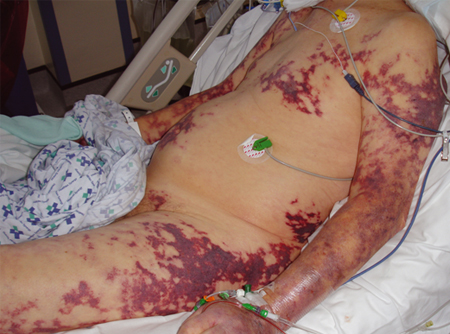
- ელვისებური პურპურა
- სიყვითლე
- ილეუსი
რისკფაქტორები
- 65 წელზე უფროსი ასაკი
- სუსტი იმუნიტეტი
- ინტრავენური მოწყობილობები ან შარდის კათეტერები
- ახლახანს გადატანილი ქირურგიული ჩარევა ან სხვა ინვაზიური პროცედურა
- ჰემოდიალიზი
- შაქრიანი დიაბეტი
- ნარკოტიკების ინტრავენური მოხმარება
- ალკოჰოლის მოხმარებით განპირობებული დაავადება
- კანის მთლიანობის დარღვევა
- ორსულობა
- ქალაქში ცხოვრება
- ფილტვის დაავადება
- მამრობითი სქესი
- არა-თეთრკანიანი წინაპრები
- ზამთრის სეზონი
დიაგნოსტიკური კვლევები
1-ად შესაკვეთი გამოკვლევები
- სისხლის კულტურა
- ლაქტატის დონე
- სისხლის საერთო ანალიზი
- სისხლში შარდოვანა და შრატში ელექტროლიტები
- სისხლის შრატის კრეატინინი
- ღვიძლის ფუნქციური სინჯები
- კოაგულოგრამა (INR, აქტივირებული PTT)
- შრატის გლუკოზა
- CRP
- სხვა კულტურები (მაგ.ნახველის, განავლის, შარდის, ჭრილობების, კათეტერების, პროთეზული იმპლანტების, ეპიდურალური ადგილების, პლევრალური ან პერიტონიალური სითხის)
- არტერიული სისხლის აირები(ABG) ან ვენური სისხლის აირები(VBG)
- გულმკერდის რენტგენი
- ელექტროკარდიოგრამა
გასათვალისწინებელი კვლევები
- ხერხემლის პუნქცია
- ექოკარდიოგრამა (ტრანს-თორაკალური ან ტრანს-ეზოფაგური)
- ულტრაბგერითი გამოკვლევა
- გულმკერდის ან მუცლის ღრუს კომპიუტერული ტომოგრაფია
- შრატის პროკალციტონინი
მკურნალობის ალგორითმი
სავარაუდო ან დადასტურებული სეფსისი
კონტრიბუტორები
ავტორები
Andre C. Kalil, MD, MPH, FACP, FIDSA, FCCM
Professor
Department of Internal Medicine
Division of Infectious Diseases
University of Nebraska Medical Center
Omaha
NE
გაფრთხილება:
ACK declares that he has no competing interests.
Kelly Cawcutt, MD, MS, FACP, FIDSA, FCCM
Associate Professor
Department of Internal Medicine
Division of Pulmonary, Critical Care, Sleep & Allergy
University of Nebraska Medical Center
Omaha
NE
გაფრთხილება:
KC has received payment for medical writing from IDSA and CloroxPro. KC has received honoraria for creation of educational materials from the Society for Healthcare Epidemiology of America (SHEA) and payment from BD. KC has received honoraria and travel expenses from NAPA. KC has received payment for book proposal review from Elsevier.
მადლიერება
Professor Andre Kalil and Dr Kelly Cawcutt would like to gratefully acknowledge Dr Ron Daniels, Dr Matt Inada-Kim, Dr Aamir Saifuddin, Dr Tim Nutbeam, Dr Edward Berry, Dr Lewys Richmond, and Dr Paul Kempen, previous contributors to this topic.
გაფრთხილება:
RD has received payment for consultancy on sepsis from Kimal Plc, manufacturers of vascular access devices; from the Northumbria Partnership, a patient safety collaborative; and, where annual leave or other income was compromised in fulfilling his charity duties, from the UK Sepsis Trust. RD has received sponsorship to attend and speak at one meeting from Abbott Diagnostics. He is CEO of the UK Sepsis Trust and Global Sepsis Alliance, and advises HM Government, the World Health Organization, and NHS England on sepsis. Each of these positions demands that he express opinion on strategies around the recognition and management of sepsis. MIK is a national clinical advisor on sepsis to NHS England and a national clinical advisor on deterioration to NHS Improvement. He was reimbursed for a slide set by Relias Learning. AS is the clinical fellow to the National Medical Director at NHS Improvement. AS has been sponsored on two occasions by Dr Falk Pharma UK to attend specialist gastroenterology conferences abroad; there was no contractual obligation to disseminate product information. TN is a clinical adviser to the UK Sepsis Trust. EB, LR, and PK declare that they have no competing interests.
რეცენზენტები
Steven M. Opal, MD, FIDSA
Professor of Medicine
Infectious Disease Division
Rhode Island Hospital
Alpert Medical School of Brown University
Providence
RI
გაფრთხილება:
SMO declares that he has no competing interests.
Laura Evans, MD, MSc, FCCP, FCCM
Associate Professor
NYU School of Medicine
Medical Director of Critical Care
Bellevue Hospital Center
New York
NY
გაფრთხილება:
LE serves as the guidelines co-chair and on the steering committee of the Surviving Sepsis Campaign.
რეცენზენტების განცხადებები
BMJ Best Practice-ის თემების განახლება სხვადასხვა პერიოდულობით ხდება მტკიცებულებებისა და რეკომენდაციების განვითარების შესაბამისად. ქვემოთ ჩამოთვლილმა რეცენზენტებმა თემის არსებობის მანძილზე კონტენტს ერთხელ მაინც გადახედეს.
გაფრთხილება
რეცენზენტების აფილიაციები და გაფრთხილებები მოცემულია გადახედვის მომენტისთვის.
წყაროები
ძირითადი სტატიები
Singer M, Deutschman CS, Seymour CW, et al. The third international consensus definitions for sepsis and septic shock (Sepsis-3). JAMA. 2016 Feb 23;315(8):801-10.სრული ტექსტი აბსტრაქტი
National Institute for Health and Care Excellence. Sepsis: recognition, diagnosis and early management. Sep 2017 [internet publication].სრული ტექსტი
Evans L, Rhodes A, Alhazzani W, et al. Surviving sepsis campaign: international guidelines for management of sepsis and septic shock 2021. Crit Care Med. 2021 Nov 1;49(11):e1063-143.სრული ტექსტი აბსტრაქტი
გამოყენებული სტატიები
ამ თემაში მოხსენიებული წყაროების სრული სია ხელმისაწვდომია მომხმარებლებისთვის, რომლებსაც აქვთ წვდომა BMJ Best Practice-ის ყველა ნაწილზე.
დიფერენციული დიაგნოზები
- 2019 წლის კორონავირუსით გამოწვეული დაავადება (COVID-19)
- სისტემური ანთებითი რეაქციის სინდრომის (SIRS) არა-ინფექციური მიზეზები
- მიოკარდიუმის ინფარქტი (MI)
მეტი დიფერენციული დიაგნოზებიგაიდლაინები
- Suspected sepsis: recognition, diagnosis and early management
- Surviving sepsis campaign guidelines for management of sepsis and septic shock - 2021
მეტი გაიდლაინებიპაციენტის ბროშურები
Sepsis in adults
Cannula insertion
მეტი პაციენტის ბროშურებიკალკულატორები
APACHE II ქულების სისტემა
მეტი კალკულატორებიVideos
ლუმბური პუნქციის დიაგნოზი ზრდასრულებში: ანიმაციური დემონსტრაცია
ვენიპუნქტურა და ფლებოტომია - ანიმაციური დემონსტრაცია
მეტი ვიდეოები შედით სისტემაში ან გამოიწერეთ BMJ Best Practice
ამ მასალის გამოყენება ექვემდებარება ჩვენს განცხადებას