Summary
Definition
Анамнез и осмотр
Ключевые диагностические факторы
- palpitaciones
- pulso irregular
- Factores de riesgo
Другие диагностические факторы
- disnea/disnea
- hipotensión sintomática
- dolor/opresión/malestar en el pecho
- fatiga
- ansiedad
- trastorno cognitivo
- mareos
- poliuria
- Sonidos respiratorios anormales
- Ruidos cardíacos adicionales
- aumento de la presión venosa yugular
- evidencia de accidente cerebrovascular
- Presíncope y síncope
Факторы риска
- mayor edad
- hipertensión
- insuficiencia cardíaca.
- diabetes mellitus
- apnea obstructiva del sueño
- obesidad
- arteriopatía coronaria
- enfermedad valvular
- Otras enfermedades cardíacas
- consumo regular y excesivo de alcohol
- cirugía cardíaca o torácica
- otras arritmias auriculares
- accidente cerebrovascular previo/ataque isquémico transitorio
- hipertiroidismo
- niveles atléticos de actividad física
- Enfermedad pulmonar obstructiva crónica (EPOC)
- tabaquismo
Диагностические исследования
Исследования, которые показаны в первую очередь
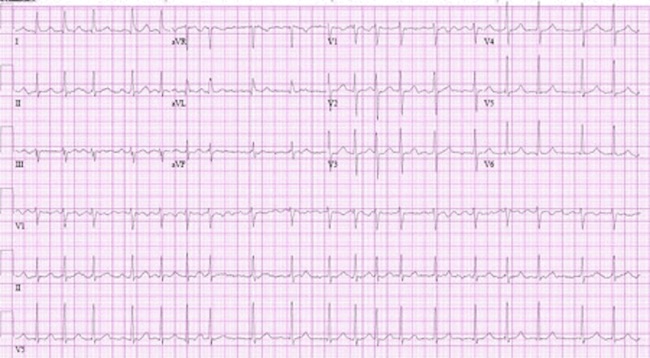
- electrocardiograma (ECG)
- hemograma completo (HC)
- perfil de coagulación
- electrolitos, urea y creatinina
- función tiroidea
- radiografía del tórax (RT)
- ecocardiografía transtorácica (ETT)
Исследования, проведение которых нужно рассмотреть
- troponina cardíaca
- GSA
- proteína C-reactiva
- Péptido natriurético tipo B (PNB)/Prohormona N-terminal del péptido natriurético tipo B (NT-pro-PNB).
- pruebas de función hepática (PFH)
- velocidad de sedimentación globular
- ecocardiograma transesofágico (ETE)
- Telemetría para pacientes hospitalizados o monitor Holter de 24 horas
- angiografía coronaria (TC o convencional) o pruebas de esfuerzo
- RMC cardíaca con contraste de gadolinio tardío
- tomografía computarizada (TC) cerebral
- IRM cerebral
- Angiografía pulmonar por tomografía computarizada (APTC)
Алгоритм лечения
hemodinámicamente inestable
hemodinámicamente estable: inicio <48 horas
hemodinámicamente estable: inicio ≥48 horas o incierto
después de la estabilización
Составители
Эксперты-консультанты
Shrilla Banerjee, MD, FRCP
Consultant Interventional Cardiologist
East Surrey Hospital
Surrey and Sussex Healthcare NHS Trust
UK
Раскрытие информации
SB has received speaker fees for educational lectures (presentation content was her own) and meeting participation from Menarini, Edwards Lifesciences, Abbott Vascular, and Shockwave IVL. She has also participated in an Advisory Board for Sahajanand Medical Technologies Limited. SB has received travel sponsorship from Biosensors International to attend the PCR meeting in Paris in 2022. She has prepared a manuscript on coronary microvascular dysfunction for Abbott for Cardiovascular News (no royalties).
Выражение благодарностей
BMJ Best Practice would like to gratefully acknowledge the previous team of expert contributors, whose work is retained in parts of the content:
Arti N. Shah, MS, MD
Director
Cardiac Electrophysiology
Elmhurst Hospital Center
Elmhurst
Assistant Professor of Medicine
Mount Sinai School of Medicine
New York
NY
ANS is an author of a number of references cited in this topic.
Bharat K. Kantharia MD, FRCP, FAHA, FACC, FESC, FHRS
Cardiovascular and Heart Rhythm Consultant
Attending and Consultant Cardiac Electrophysiologist
Mount Sinai Hospitals
New York Methodist Hospital
New York
NY
West Houston Medical Center
Memorial Hermann Hospital
Houston
TX
BKK is an author of a number of references cited in this topic.
Resham Baruah MBBS, BSc, MRCP, PhD
Consultant Cardiologist
Chelsea and Westminster Hospital and the Royal Brompton and Harefield NHS Trust
London
UK
RB has received honorarium/speaker fees from Novartis and Boehringer Ingleheim.
Adam D. Hartley MBBS, BSc, MRCP
Wellcome Trust Clinical Research Fellow
Imperial College London
Specialist Registrar in Cardiology
Imperial College Healthcare NHS Trust
London
UK
ADH declares that he has no competing interests.
Рецензенты
Gregory Lip, MD, FRCP, DFM, FACC, FESC, FEHRA
Price-Evans Professor of Cardiovascular Medicine
University of Liverpool
Senior Investigator
National Institute for Health Research
UK
Distinguished Professor
Faculty of Medicine
Aalborg University
Denmark
Adjunct Professor
Yonsei University
Seoul
South Korea
Раскрытие информации
GL is a consultant for Bayer/Janssen, BMS/Pfizer, Medtronic, Boehringer Ingelheim, Novartis, Verseon, and Daiichi-Sankyo. He is a speaker for Bayer, BMS/Pfizer, Medtronic, Boehringer Ingelheim, and Daiichi-Sankyo. No fees are directly received personally. GL is an author of a number of references cited in this topic.
Peer reviewer acknowledgements
BMJ Best Practice topics are updated on a rolling basis in line with developments in evidence and guidance. The peer reviewers listed here have reviewed the content at least once during the history of the topic.
Disclosures
Peer reviewer affiliations and disclosures pertain to the time of the review.
Список литературы
Основные статьи
Hindricks G, Potpara T, Dagres N, et al. 2020 ESC guidelines for the diagnosis and management of atrial fibrillation developed in collaboration with the European Association of Cardio-Thoracic Surgery (EACTS). Eur Heart J. 2021 Feb 1;42(5):373-498.Полный текст Аннотация
National Institute for Health and Care Excellence. Atrial fibrillation: diagnosis and management. June 2021 [internet publication].Полный текст
Статьи, указанные как источники
A full list of sources referenced in this topic is available to users with access to all of BMJ Best Practice.
Отличия
- Aleteo auricular
- Síndrome de Wolff-Parkinson-White
- Taquicardia auricular
Больше ОтличияРекомендации
- Atrial fibrillation: diagnosis and management
- 2020 ESC guidelines for the management of atrial fibrillation
Больше РекомендацииКалькуляторы
Puntuación CHA(2)DS(2)-VASc para el riesgo de accidente cerebrovascular (ictus) en pacientes con fibrilación auricular
Puntuación de riesgo de sangrado ORBIT
Больше КалькуляторыVideos
Demostración animada de como realizar un electrocardiograma (ECG)
Больше ВидеоЛифлеты для пациента
Fibrilación auricular: ¿qué es?
Больше Лифлеты для пациента Войдите в учетную запись или оформите подписку, чтобы получить полноценный доступ к BMJ Best Practice
Использование этого контента попадает под действие нашего заявления об отказе от ответственности