Summary
Definition
History and exam
Key diagnostic factors
- presence of risk factors
- age >40 years
- chronic sun exposure
- smoking
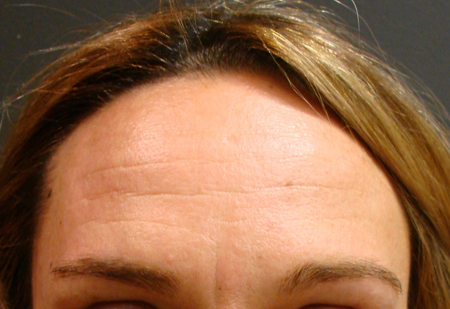
- lines on face
- horizontal neck folds
- lines on dorsum of hands and wrists
- dynamic lines
- gravitational lines
- deep wrinkles
- fine wrinkles
Other diagnostic factors
- skin laxity
- dyschromia
- dermal elastosis
- erythema
- telangiectasia
- textural changes
- actinic keratoses
Risk factors
- genetic susceptibility
- age >40 years
- white skin
- hyperdynamic muscular activity
- chronic sun exposure
- smoking
- hormonal changes
- pollution
- low socioeconomic class
- low BMI
Diagnostic tests
1st tests to order
- macrophotography
Tests to consider
- skin biopsy
- three-dimensional (3D) imaging
- multispectral imaging
Emerging tests
- in vivo confocal microscopy
Treatment algorithm
no obvious wrinkles at rest or on animation
superficial wrinkles on animation only
deep wrinkles on animation only
superficial wrinkles at rest, deep wrinkles on animation
deep wrinkles and sagging skin at rest and deeper wrinkles on animation
Contributors
Authors
Charlene Lam, MD, MPH, FAAD
Associate Professor of Dermatology
Assistant Director (Office of Research Diversity and Health Equity)
Vice Chair (Community Health) of Dermatology
Penn State Cancer Institute
Hershey
PA
Disclosures
CL declares that she has no competing interests.
Payvand Kamrani, DO, FAAD
Board-Certified Dermatologist
Aesthetic Solutions
Chapel Hill
NC
Disclosures
PK declares that she has no competing interests.
Acknowledgements
Dr Charlene Lam would like to gratefully acknowledge Dr Dimitrios Dionyssiou, Dr Efterpi Demiri, and Dr Elisavet Lazaridou, previous contributors to this topic.
Peer reviewers
George Hruza, MD
Clinical Professor of Dermatology and Otolaryngology
St. Louis University
St. Louis
Director
Laser and Dermatologic Surgery Center
Chesterfield
MO
Disclosures
GH has been reimbursed by Allergan, Dermik, and Colbar Life Sciences to attend educational symposia and has also been paid to teach other physicians. GH is a consultant for Ulthera and has received equipment for research from Syneron. GH is an author of a reference cited in this topic.
Stephanos Papanastasiou, FRCSEd, MSc, EBOPRAS, FESSH
Consultant Plastic Surgeon
Lister Hospital
Stevenage
UK
Disclosures
SP declares that he has no competing interests.
Peer reviewer acknowledgements
BMJ Best Practice topics are updated on a rolling basis in line with developments in evidence and guidance. The peer reviewers listed here have reviewed the content at least once during the history of the topic.
Disclosures
Peer reviewer affiliations and disclosures pertain to the time of the review.
References
Key articles
Shetty MK; IADVL Dermatosurgery Task Force. Guidelines on the use of botulinum toxin type A. Indian J Dermatol Venereol Leprol. 2008 Jan;74(suppl):S13-22.Full text Abstract
Goldie K, Peeters W, Alghoul M, et al. Global consensus guidelines for the injection of diluted and hyperdiluted calcium hydroxylapatite for skin tightening. Dermatol Surg. 2018 Nov;44 Suppl 1:S32-41. Abstract
Wong TH, Morton CA, Collier N, et al. British Association of Dermatologists and British Photodermatology Group guidelines for topical photodynamic therapy 2018. Br J Dermatol. 2019 Apr;180(4):730-9.Full text
Reference articles
A full list of sources referenced in this topic is available to users with access to all of BMJ Best Practice.
Differentials
- Cutis laxa
- Werner syndrome (progeria or pangeria)
- Xeroderma pigmentosum
More DifferentialsGuidelines
- International consensus recommendations on the aesthetic usage of ready-to-use abobotulinumtoxinA (Alluzience)
- Guidelines for topical photodynamic therapy 2018
More GuidelinesPatient information
Wrinkles
More Patient information Log in or subscribe to access all of BMJ Best Practice
Use of this content is subject to our disclaimer