Summary
განსაზღვრება
History and exam
Key diagnostic factors
- chest pain
Other diagnostic factors
- diaphoresis
- epigastric pain
- dyspnea
- nausea and vomiting
- carotid bruit
- diminished or absent peripheral pulses
- syncope
- back pain
- arrhythmias
- abnormal heart sounds
- rales
Risk factors
- smoking
- hypertension
- diabetes mellitus
- obesity and metabolic syndrome
- sedentary behavior and physical inactivity
- dyslipidemia
- chronic kidney disease (CKD)
- atherosclerosis (history of angina, myocardial infarction, stroke, transient ischemic attack, peripheral vascular disease)
- family history of premature CAD
- age >60 years
- cocaine use
- depression
- sleep apnea
- elevated C-reactive protein levels
- mediastinal radiation
- migraine
- adverse pregnancy outcomes
Diagnostic tests
1st tests to order
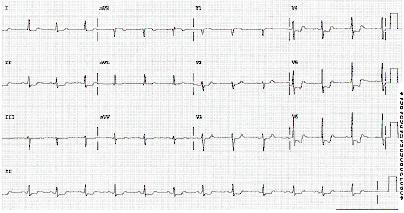
- ECG
- cardiac biomarkers
- CXR
- CBC
- electrolytes and renal function
- LFTs
- blood glucose
- CRP
- lipid profile
- coagulation profile
Tests to avoid
- coronary artery calcium (CAC)
Tests to consider
- echocardiogram
- coronary angiography
- functional (stress) testing
- coronary CT angiography
- CT chest or MRI
Treatment algorithm
suspected non-ST-elevation acute coronary syndrome
non-ST-elevation acute coronary syndrome (unstable angina or non-ST-elevation myocardial infarction)
poststabilization: confirmed unstable angina
Contributors
Expert advisers
Syed Wamique Yusuf, MBBS, FRCPI
Professor of Medicine
Department of Cardiology
University of Texas
MD Anderson Cancer Center
Houston, TX
Disclosures
SWY declares that he has no competing interests.
Acknowledgements
Dr Syed Wamique Yusuf would like to gratefully acknowledge Dr Iyad N. Daher, the previous contributor to this topic.
Disclosures
IND declares that he has no competing interests.
Peer reviewers
John Charpie, MD, PhD
Associate Professor of Pediatrics
Medical Director
Pediatric Cardiothoracic Intensive Care Unit
University of Michigan Congenital Heart Center
Ann Arbor, MI
Disclosures
JC declares that he has no competing interests.
Zaza Iakobishvili, MD, PhD
Director
Emergency Cardiac Service ICCU
Department of Cardiology
Rabin Medical Center
Petah Tikva
Israel
Disclosures
ZI declares that he has no competing interests.
Helge Mollmann, MD
Kerckhoff Heart and Thorax Center
Bad Nauheim
Germany
Disclosures
HM declares that he has no competing interests.
Peer reviewer acknowledgements
BMJ Best Practice topics are updated on a rolling basis in line with developments in evidence and guidance. The peer reviewers listed here have reviewed the content at least once during the history of the topic.
Disclosures
Peer reviewer affiliations and disclosures pertain to the time of the review.
References
Key articles
Byrne RA, Rossello X, Coughlan JJ, et al. 2023 ESC guidelines for the management of acute coronary syndromes. Eur Heart J. 2023 Oct 12;44(38):3720-826.Full text Abstract
Rao SV, O'Donoghue ML, Ruel M, et al. 2025 ACC/AHA/ACEP/NAEMSP/SCAI guideline for the management of patients with acute coronary syndromes: a report of the American College of Cardiology/American Heart Association Joint Committee on clinical practice guidelines. Circulation. 2025 Apr;151(13):e771-862.Full text Abstract
Gulati M, Levy PD, Mukherjee D, et al. 2021 AHA/ACC/ASE/CHEST/SAEM/SCCT/SCMR guideline for the evaluation and diagnosis of chest pain: a report of the American College of Cardiology/American Heart Association Joint Committee on Clinical Practice Guidelines. J Am Coll Cardiol. 2021 Nov 30;78(22):e187-285.Full text Abstract
Lawton JS, Tamis-Holland JE, Bangalore S, et al. 2021 ACC/AHA/SCAI guideline for coronary artery revascularization: a report of the American College of Cardiology/American Heart Association Joint Committee on Clinical Practice Guidelines. Circulation. 2022 Jan 18;145(3):e18-114.Full text Abstract
Reference articles
A full list of sources referenced in this topic is available to users with access to all of BMJ Best Practice.
Differentials
- Stable angina
- Prinzmetal (variant or vasospastic) angina
- Non-ST-elevation myocardial infarction
More DifferentialsGuidelines
- 2025 ACC/AHA/ACEP/NAEMSP/SCAI guideline for the management of patients with acute coronary syndromes
- 2025 American Heart Association guidelines for cardiopulmonary resuscitation and emergency cardiovascular care
More GuidelinesCalculators
ASCVD Risk Estimator Plus
Thrombolysis in Myocardial Infarction (TIMI) Score for Unstable Angina Non ST Elevation Myocardial Infarction
More CalculatorsVideos
Venepuncture and phlebotomy: animated demonstration
How to perform an ECG: animated demonstration
More videosPatient information
Unstable angina: what is it?
Coronary angioplasty
More Patient information Log in or subscribe to access all of BMJ Best Practice
Use of this content is subject to our disclaimer