Resumo
Definição
História e exame físico
Principais fatores diagnósticos
- right upper quadrant or epigastric pain (lasting >30 minutes)
Outros fatores diagnósticos
- postprandial pain
- right upper quadrant or epigastric tenderness
- nausea
- jaundice
Fatores de risco
- increasing age
- female sex
- Hispanic and American Indian ethnicity
- family history of gallstones
- gene mutations
- elevated estrogen and progesterone levels
- obesity, diabetes, and metabolic syndrome
- nonalcoholic fatty liver disease
- prolonged fasting/rapid weight loss
- total parenteral nutrition
- use of octreotide
- use of glucagon-like peptide-1 (GLP-1) receptor agonists
- use of ceftriaxone
- terminal ileum disease or resection
- hemoglobinopathy
- cirrhosis
- cystic fibrosis
- diet and lifestyle
- smoking
- helicobacter pylori gallbladder infection
Investigações diagnósticas
Primeiras investigações a serem solicitadas
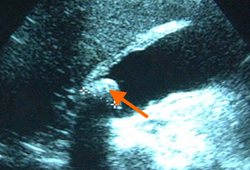
- abdominal ultrasound
- serum liver function tests
- CBC
- serum lipase or amylase
Investigações a serem consideradas
- magnetic resonance cholangiopancreatography
- endoscopic ultrasound scan
- endoscopic retrograde cholangiopancreatography
- abdominal CT scan
Algoritmo de tratamento
symptomatic cholelithiasis
choledocholithiasis with or without symptoms
asymptomatic cholelithiasis
Colaboradores
Consultores especialistas
Eldon Shaffer, MD, FRCPC
Emeritus Professor of Medicine
Division of Gastroenterology
University of Calgary
Calgary
Canada
Declarações
ES declares that he has no competing interests.
Agradecimentos
Professor Eldon Shaffer would like to gratefully acknowledge Dr Vikesh K. Singh and Dr Anthony N. Kalloo, previous contributors to this topic.
Declarações
VKS and ANK declare that they have no competing interests.
Revisores
Timothy B. Gardner, MD
Assistant Professor
Director of Pancreatic Disorders
Section of Gastroenterology
Dartmouth-Hitchcock Medical Center
Lebanon
NH
Declarações
TBG declares that he has no competing interests.
Ajith Siriwardena, MD, FRCS
Professor of Hepatobiliary Surgery
Manchester Royal Infirmary
Manchester
UK
Declarações
AS declares that he has no competing interests.
Kurinchi Gurusamy, MBBS, MS, MRCS, MSc
Clinical Research Fellow
Hepatopancreatobiliary and Liver Transplant Surgery
University Department of Surgery
Royal Free Campus
UCL Medical School
London
UK
Declarações
KG declares that he has no competing interests.
Créditos aos pareceristas
Os tópicos do BMJ Best Practice são constantemente atualizados, seguindo os desenvolvimentos das evidências e das diretrizes. Os pareceristas aqui listados revisaram o conteúdo pelo menos uma vez durante a história do tópico.
Declarações
As afiliações e declarações dos pareceristas referem--se ao momento da revisão.
Referências
Principais artigos
European Association for the Study of the Liver (EASL). EASL clinical practice guidelines on the prevention, diagnosis and treatment of gallstones. J Hepatol. 2016 Jul;65(1):146-81.Texto completo Resumo
ASGE Standards of Practice Committee; Buxbaum JL, Abbas Fehmi SM, Sultan S, et al. ASGE guideline on the role of endoscopy in the evaluation and management of choledocholithiasis. Gastrointest Endosc. 2019 Jun;89(6):1075-105;e15.Texto completo Resumo
Fujita N, Yasuda I, Endo I, et al. Evidence-based clinical practice guidelines for cholelithiasis 2021. J Gastroenterol. 2023 Sep;58(9):801-33.Texto completo Resumo
Artigos de referência
Uma lista completa das fontes referenciadas neste tópico está disponível para os usuários com acesso total ao BMJ Best Practice.
Diagnósticos diferenciais
- Acalculous cholecystitis
- Nonbiliary acute pancreatitis
- Peptic ulcer disease (PUD)
Mais Diagnósticos diferenciaisDiretrizes
- Evidence-based clinical practice guidelines for cholelithiasis 2021
- ACR appropriateness criteria: right upper quadrant pain
Mais DiretrizesCalculadoras
Atrial Fibrillation CHA(2)DS(2)-VASc Score for Stroke Risk
Mais CalculadorasFolhetos informativos para os pacientes
Gallstones
Gallstones: questions to ask your doctor
Mais Folhetos informativos para os pacientes Conectar-se ou assinar para acessar todo o BMJ Best Practice
O uso deste conteúdo está sujeito ao nosso aviso legal