Summary
Definition
History and exam
Key diagnostic factors
- history of tick bite
Other diagnostic factors
- constitutional symptoms
- pyrexia
- bradycardia
- jaundice
- hepatosplenomegaly
- petechiae, splinter hemorrhages, or ecchymoses
- dark urine
- conjunctival injection
- cough
- sore throat
- photophobia
Risk factors
- residence in or travel to an endemic region
- exposure to Ixodes scapularis ticks
- asplenia
- immunosuppression
- blood transfusion
- age >50 years
- Lyme disease
- human granulocytic anaplasmosis
- maternal infection during pregnancy
Diagnostic tests
1st tests to order
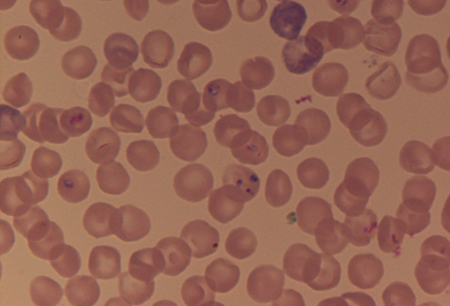
- peripheral blood smear (Giemsa or Wright stained)
- polymerase chain reaction (PCR) for babesial DNA
- CBC
- LFTs
- serum creatinine and blood urea nitrogen (BUN)
- urinalysis
- enzyme-linked immunosorbent assay (ELISA) and/or immunofluorescence assay for Lyme disease
- polymerase chain reaction (PCR) and/or immunofluorescence assay or buffy coat smear for human granulocytic anaplasmosis (HGA)
Tests to consider
- indirect immunofluorescence antibody assay for Babesia microti
- IgG/IgM immunoblot for Lyme disease
- HIV serology
- serum LDH
Treatment algorithm
asymptomatic documented infection
mild to moderate disease
acute severe disease
recurrent or refractory disease
Contributors
Authors
Sarah Hochman, MD
Assistant Professor
Department of Medicine
Division of Infectious Diseases and Immunology
New York University School of Medicine
New York, NY
Disclosures
SH declares that she has no competing interests.
Louis M. Weiss, MD, MPH

Professor, Department of Pathology
Professor, Department of Medicine (Infectious Diseases)
Albert Einstein College of Medicine
Bronx, NY
Declarações
LMW has received grant funding from the National Institutes of Health for research on Toxoplasma gondii and microsporidiosis. LMW receives training grants for infectious diseases at the Albert Einstein College of Medicine, and serves on the board of the Humane Society of Westchester.
Revisores
Cheston B. Cunha, MD
Associate Professor of Medicine
Warren Alpert Medical School of Brown University
Medical Director of the Antimicrobial Stewardship Programs
Rhodes Island Hospital and Miriam Hospital
Providence, RI
Disclosures
CBC declares that he has no competing interests.
Jeremy Gray, BSc, MSc, PhD
Professor
Department of Environmental Resource Management
University College Dublin
Belfield
Dublin
Republic of Ireland
Disclosures
JG declares that he has no competing interests.
Peer reviewer acknowledgements
BMJ Best Practice topics are updated on a rolling basis in line with developments in evidence and guidance. The peer reviewers listed here have reviewed the content at least once during the history of the topic.
Disclosures
Peer reviewer affiliations and disclosures pertain to the time of the review.
References
Key articles
Centers for Disease Control and Prevention. Tickborne diseases of the United States: a reference manual for health care providers, sixth edition. Aug 2022 [internet publication].Full text
Krause PJ, Auwaerter PG, Bannuru RR, et al. Clinical practice guidelines by the Infectious Diseases Society of America (IDSA): 2020 guideline on diagnosis and management of babesiosis. Clin Infect Dis. 2021 Jan 27;72(2):e49-64.Full text Abstract
Reference articles
A full list of sources referenced in this topic is available to users with access to all of BMJ Best Practice.
Differentials
- Lyme disease
- Human granulocytic anaplasmosis
- Rocky Mountain spotted fever
More DifferentialsGuidelines
- Tickborne diseases of the United States: a reference manual for health care providers
- Clinical practice guidelines by the Infectious Diseases Society of America (IDSA): 2020 guideline on diagnosis and management of babesiosis
More Guidelines Log in or subscribe to access all of BMJ Best Practice
Use of this content is subject to our disclaimer