Summary
Definition
History and exam
Key diagnostic factors
- snoring (noisy breathing during sleep)
- witnessed apneas
- choking or gasping
Other diagnostic factors
- waking up tired
- daytime somnolence
- behavioral problems
- faltering growth
Risk factors
- increasing age
- male sex
- overweight/obesity
- craniofacial abnormalities
- endocrine disorders
- neck circumference >40 cm
- sedating drugs
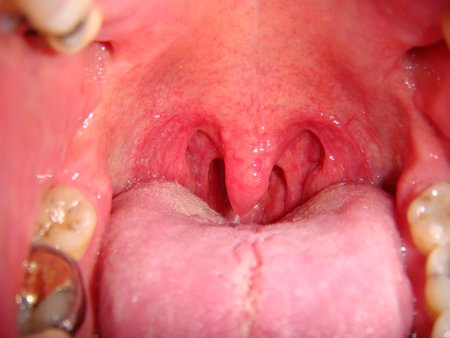
- adenotonsillar hypertrophy
- long soft palate and uvula
- alcohol consumption
- gastroesophageal reflux
- active or passive smoking
- abnormal epiglottis
- hypopharyngeal cysts or tumors
- nasal obstruction
- asthma
Diagnostic tests
1st tests to order
- clinical exam
- snoring scale score
- Epworth sleepiness score (ESS)
Tests to consider
- thyroid function tests (TFTs)
- growth hormone level
- skin-prick tests/serum allergen-specific IgE tests
- nasal decongestant test
- sleep study
- acoustic analysis
- pharyngeal manometry
- flexible nasendoscopy
Emerging tests
- head and neck 3-dimensional CT
- head and neck MRI
Treatment algorithm
adult: without upper airway resistance syndrome (UARS) or obstructive sleep apnea (OSA)
adult: with upper airway resistance syndrome (UARS) or obstructive sleep apnea (OSA)
child: without concurrent indication for tonsillectomy or adenoidectomy
child: with concurrent indication for tonsillectomy or adenoidectomy
child: with upper airway resistance syndrome (UARS) or obstructive sleep apnea (OSA)
Contributors
Authors
Showkat Mirza, BM, BS, BMedSci, FRCS(ORL-HNS)
Consultant in Otorhinolaryngology-Head & Neck Surgery
Sheffield Teaching Hospitals NHS Trust
Sheffield
UK
Disclosures
SM declares that he has no competing interests.
Christine Fabri, MD (Melit), MRCS (Ed), DOHNS (Ed), MCh, FEB ORL-HNS
Rhinology Fellow
Sheffield Teaching Hospitals NHS Trust
Sheffield
UK
Disclosures
CF declares that she has no competing interests.
Acknowledgements
Mr Showkat Mirza and Dr Christine Fabri would like to gratefully acknowledge Miss Nadia Ashraf, a previous contributor to this topic.
Disclosures
NA declares that she has no competing interests.
Peer reviewers
Jayant Pinto, MD
Assistant Professor of Surgery
Section of Otolaryngology-Head and Neck Surgery
University of Chicago
Chicago
IL
Disclosures
JP declares that he has no competing interests.
Michael J. Hensley, MBBS, PhD, FRACP
Director
Department of Respiratory and Sleep Medicine
John Hunter Hospital
Professor and Head
School of Medicine and Public Health
Faculty of Health
The University of Newcastle
NSW
Australia
Disclosures
MJH declares that he has no competing interests.
Peer reviewer acknowledgements
BMJ Best Practice topics are updated on a rolling basis in line with developments in evidence and guidance. The peer reviewers listed here have reviewed the content at least once during the history of the topic.
Disclosures
Peer reviewer affiliations and disclosures pertain to the time of the review.
References
Key articles
American Academy of Sleep Medicine. The AASM international classification of sleep disorders - third edition, text revision (ICSD-3-TR). Jun 2023 [internet publication].Full text
Fairbanks DNF, Mickelson SA, Woodson BT, eds. Snoring and obstructive sleep apnea. 3rd ed. Philadelphia, PA: Lippincott, Williams & Wilkins; 2003.
Ramar K, Dort LC, Katz SG, et al. Clinical practice guideline for the treatment of obstructive sleep apnea and snoring with oral appliance therapy: an update for 2015. J Clin Sleep Med. 2015 Jul 15;11(7):773-827.Full text Abstract
Reference articles
A full list of sources referenced in this topic is available to users with access to all of BMJ Best Practice.
Differentials
- Upper airway resistance syndrome (UARS)
- Obstructive sleep apnea (OSA)
- Stridor
More DifferentialsGuidelines
- The AASM manual for the scoring of sleep and associated events
- British Thoracic Society guideline for diagnosing and monitoring paediatric sleep-disordered breathing
More GuidelinesPatient information
Sleep apnea in adults (obstructive)
More Patient informationVideos
How to examine the nasal cavity
More videos Log in or subscribe to access all of BMJ Best Practice
Use of this content is subject to our disclaimer