Summary
Definition
History and exam
Key diagnostic factors
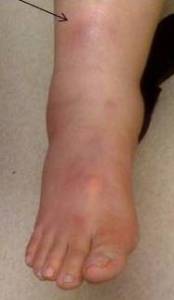
- nodules on shins
- uveitis, red eyes, retinal nodules, or candle-wax drippings
- nodules on skin areas other than the shin
Other diagnostic factors
- joint pains
- fever
- diarrhea, constipation, abdominal pain, hematochezia
- enlarged spleen
- miliary nodules on the retina
Risk factors
- streptococcal infection
- sarcoidosis
- tuberculosis
- coccidioidomycosis
- histoplasmosis
- blastomycosis
- Behcet disease
- brucellosis
- use of certain drugs
- use of certain vaccines
- psittacosis
- inflammatory bowel disease
- pregnancy
- malignancy
Diagnostic tests
1st tests to order
- CBC
- antistreptolysin-O titer
- chest x-ray
- tuberculin skin test, interferon-gamma release assay
Tests to consider
- deep punch biopsies including subcutaneous fat or incisional biopsies
- serum ACE level
- skin lesion biopsy
- coccidioidin skin test
- histoplasmin skin test
- blastomycosis serology
- brucellosis serology
- psittacosis serology
- x-ray symptomatic joints
- rheumatoid factor testing
- stool cultures
- coproparasitoscopic stool study
- multiple-pathogen nucleic acid amplification test (e.g., polymerase chain reaction) of stool
- colonoscopy
- urine or serum pregnancy test
Treatment algorithm
mild to moderately severe symptoms
severe refractory symptoms
Contributors
Authors
Daniela Kroshinsky, MD, MPH

Professor of Dermatology
Vice Chair of Strategic Initiatives and Faculty Affairs
Director of Pediatric Dermatology
Duke University Medical Center
Durham, NC
Disclosures
DK declares that she has no competing interests.
Acknowledgements
Dr Daniela Kroshinsky would like to gratefully acknowledge Dr Om P. Sharma, a previous contributor to this topic. Dr Kroshinsky would also like to thank Priyanka Vedak for her contribution to this topic. We would like to gratefully acknowledge the contribution of the late Elisabeth Higgins (Consultant Dermatologist, King’s College Hospital) for her peer review of this topic.
Disclosures
OPS declared that he had no competing interests. PV declared that she had no competing interests. EH declared that she had no competing interests.
Peer reviewers
Robert T. Brodell, MD
Professor of Internal Medicine
Clinical Professor of Dermatopathology
Northeastern Ohio Universities College of Medicine
Warren
Associate Clinical Professor of Dermatology
Case Western Reserve University School of Medicine
Cleveland, OH
Disclosures
RTB declares that he has no competing interests.
Peer reviewer acknowledgements
BMJ Best Practice topics are updated on a rolling basis in line with developments in evidence and guidance. The peer reviewers listed here have reviewed the content at least once during the history of the topic.
Disclosures
Peer reviewer affiliations and disclosures pertain to the time of the review.
References
Key articles
Pérez-Garza DM, Chavez-Alvarez S, Ocampo-Candiani J, et al. Erythema nodosum: a practical approach and diagnostic algorithm. Am J Clin Dermatol. 2021 May;22(3):367-78.Full text Abstract
Schwartz RA, Nervi SJ. Erythema nodosum: a sign of systemic disease. Am Fam Physician. 2007 Mar 1;75(5):695-700.Full text Abstract
Reference articles
A full list of sources referenced in this topic is available to users with access to all of BMJ Best Practice.
Differentials
- Weber-Christian disease
- Alpha-1 antitrypsin deficiency
- Nodular vasculitis (erythema induratum or Bazin disease)
More Differentials Log in or subscribe to access all of BMJ Best Practice
Use of this content is subject to our disclaimer