Резюме
Определение
Анамнез и осмотр
Ключевые диагностические факторы
- diarrhea
Другие диагностические факторы
- abdominal pain
- vomiting
- loss of appetite
- low-grade fever
- loss of weight
- right upper quadrant abdominal pain
- jaundice
- nasal discharge and facial pain
- cough and dyspnea
Факторы риска
- contact with farm animals, especially calves and lambs
- international travel
- age: 3 years or younger
- immune deficiency: T-cell-mediated
- swimming and recreational water sports
- drinking unfiltered water
- toileting or changing diapers of young children
- Malnutrition
Диагностические исследования
Исследования, которые показаны в первую очередь
- polymerase chain reaction (PCR) for Cryptosporidium species identification
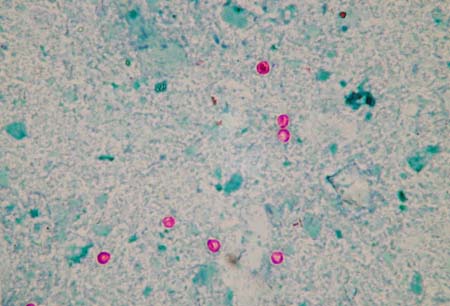
- stained stool microscopy
- Cryptosporidium antigen detection
Исследования, проведение которых нужно рассмотреть
- ultrasound scan of the biliary tract
- CT scan of the biliary tract
- endoscopic retrograde cholangiopancreatography (ERCP)
Алгоритм лечения
immunocompetent
immunocompromised
Составители
Авторы
Rachel M. Chalmers, BSc, PhD
Consultant Clinical Scientist/Honorary Professor
Director of the Cryptosporidium Reference Unit (England and Wales)
Public Health Wales Microbiology
Singleton Hospital
Swansea
UK
Раскрытие информации
RMC is an author of a number of references cited in this topic.
Angharad P. Davies, MA, MBBCh, MRCP, FRCPath, PhD
Clinical Associate Professor
College of Medicine
Swansea University
Swansea
UK
Раскрытие информации
APD is a Trustee Board Member for the Royal College of Pathologists and is an author of a number of references cited in this topic.
Рецензенты
Shauna Gunaratne, MD, MPH, DTM&H, CTropMed
Assistant Professor of Clinical Medicine
Department of Medicine
Division of Infectious Diseases
Columbia University Irving Medical Center
New York
NY
Раскрытие информации
SG declares that she has no competing interests.
Judy Streit, MD
Clinical Professor
University of Iowa Hospitals and Clinics
Iowa City
IA
Раскрытие информации
JS declares that she has no competing interests.
Peer reviewer acknowledgements
BMJ Best Practice topics are updated on a rolling basis in line with developments in evidence and guidance. The peer reviewers listed here have reviewed the content at least once during the history of the topic.
Disclosures
Peer reviewer affiliations and disclosures pertain to the time of the review.
Список литературы
Основные статьи
Shane AL, Mody RK, Crump JA, et al. 2017 Infectious Diseases Society of America clinical practice guidelines for the diagnosis and management of infectious diarrhea. Clin Infect Dis. 2017 Nov 29;65(12):1963-73.Полный текст Аннотация
National Institutes of Health, Centers for Disease Control and Prevention, HIV Medicine Association, and Infectious Diseases Society of America. Panel on Guideline for the Prevention and Treatment of Opportunistic Infections in Children with and Exposed to HIV. Guidelines for the prevention and treatment of opportunistic infections in children with and exposed to HIV: Cryptosporidiosis. 2019 [internet publication].Полный текст
National Institutes of Health, Centers for Disease Control and Prevention, HIV Medicine Association, and Infectious Diseases Society of America. Panel on Guidelines for the Prevention and Treatment of Opportunistic Infections in Adults and Adolescents with HIV. Guidelines for the prevention and treatment of opportunistic infections in adults and adolescents with HIV: cryptosporidiosis. 2023 [internet publication].Полный текст
Статьи, указанные как источники
A full list of sources referenced in this topic is available to users with access to all of BMJ Best Practice.
Отличия
- Acute diarrhea
- Chronic diarrhea
- Crohn disease
Больше ОтличияРекомендации
- Prevention and treatment of opportunistic infections in adults and adolescents with HIV
- UK standards for microbiology investigations: gastroenteritis
Больше РекомендацииЛифлеты для пациента
Diarrhea in adults
Diarrhea in children
Больше Лифлеты для пациента Войдите в учетную запись или оформите подписку, чтобы получить полноценный доступ к BMJ Best Practice
Использование этого контента попадает под действие нашего заявления об отказе от ответственности