Resumo
Definição
História e exame físico
Principais fatores diagnósticos
- história de queda ou trauma
- dor no quadril, virilha ou coxa afetados
- incapacidade de suportar peso ou mover o quadril
- perna encurtada e rotacionada externamente
- fatores de risco
Fatores de risco
- osteoporose/osteopenia
- idade avançada
- quedas
- índice de massa corporal (IMC) baixo
- sexo feminino
- trauma de alta energia
- medicações
- demência
Investigações diagnósticas
Primeiras investigações a serem solicitadas
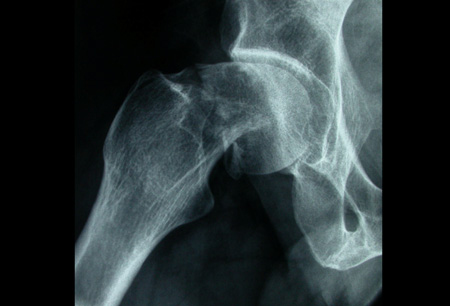
- radiografias simples
- hemograma completo
- ureia e eletrólitos
- glicose
- tipagem e reserva de sangue
- coagulograma
- eletrocardiograma (ECG)
Investigações a serem consideradas
- ressonância nuclear magnética (RNM) da pelve
- tomografia computadorizada (TC) da pelve
- cintilografia óssea com tecnécio
Algoritmo de tratamento
adequado para cirurgia
atualmente não é adequado para cirurgia: não está recebendo cuidados no final da vida
atualmente não é adequado para cirurgia: recebendo cuidados no final da vida
Pós-cirurgia
Colaboradores
Consultores especialistas
Michael Barrett, MBChB, FRCS (Tr & Orth), PG Cert Med Ed
Consultant Trauma and Orthopaedic Surgeon
Cambridge University Hospitals NHS Foundation Trust
Cambridge
UK
Declarações
MB is a director of Orthohub.xyz, an online education platform for orthopaedic surgeons. Orthohub.xyz receives sponsorship from the healthcare industry.
Acknowledgements
BMJ Best Practice would like to gratefully acknowledge the previous team of expert contributors, whose work has been retained in parts of the content:
Zoe Little
ST6 in Trauma and Orthopaedics
Epsom and St Helier University Hospitals
Epsom
UK
Brett Griffiths
Specialist Registrar
Norfolk and Norwich University Hospitals
Norwich
UK
Hiba Khan
ST4 in Trauma and Orthopaedics
Croydon University Hospital
London
UK
Declarações
ZL, BG, and HK declare that they have no competing interests.
Revisores
Antony Johansen, MB BChir
Consultant Orthogeriatrician
University Hospital of Wales
Cardiff
UK
Biografia
AJ is clinical lead for the National Hip Fracture Database, Royal College of Physicians, London, UK.
Declarações
AJ has been a co-applicant or collaborator in successful applications for non-commercial grants from the NIHR Health Technology Assessment Programme, Physiotherapy Research Foundation, and Versus Arthritis.
Créditos aos pareceristas
Os tópicos do BMJ Best Practice são constantemente atualizados, seguindo os desenvolvimentos das evidências e das diretrizes. Os pareceristas aqui listados revisaram o conteúdo pelo menos uma vez durante a história do tópico.
Declarações
As afiliações e declarações dos pareceristas referem--se ao momento da revisão.
Referências
Principais artigos
National Institute for Health and Care Excellence. Hip fracture: management. January 2023 [internet publication].Texto completo
Public Health Scotland. Scottish standards of care for hip fracture patients. May 2024 [internet publication].Texto completo
British Orthopaedic Association. BOAST: the care of the older or frail orthopaedic trauma patient. May 2019 [internet publication].Texto completo
Artigos de referência
Uma lista completa das fontes referenciadas neste tópico está disponível para os usuários com acesso total ao BMJ Best Practice.
Diagnósticos diferenciais
- Fratura do acetábulo
- Fratura nos ramos púbicos
- Fratura da haste femoral ou subtrocantérica do fêmur
Mais Diagnósticos diferenciaisDiretrizes
- Delirium: prevention, diagnosis and management in hospital and long-term care
- Hip fracture: management
Mais DiretrizesFolhetos informativos para os pacientes
Osteoporose: o que é?
Cirurgia de artroplastia do quadril
Mais Folhetos informativos para os pacientes Conectar-se ou assinar para acessar todo o BMJ Best Practice
O uso deste conteúdo está sujeito ao nosso aviso legal