Salicylate poisoning
Resumo
Definição
História e exame físico
Principais fatores diagnósticos
- ingestion of 150 mg/kg or more, or 6.5 g or more, of aspirin or aspirin equivalent
- ingestion of methyl salicylate (oil of wintergreen)
- ingestion of bismuth subsalicylate
- self-harm or suicide attempt
- children age 3 years or younger, and adults age 70 years or older
- unknown toxin ingestion or exposure
- abnormal behavior
- nausea, vomiting, hematemesis, epigastric pain
- fever and diaphoresis
- shortness of breath
- tachypnea, Kussmaul respirations
- tinnitus and/or deafness
- malaise and/or dizziness
- movement disorders, asterixis, stupor
- confusion and/or delirium (irritability, hallucinations)
- coma and/or papilledema
- seizures
- rales plus low oxygen saturation
Outros fatores diagnósticos
- volume depletion
- skin rash
Fatores de risco
- ingestion of 150 mg/kg or more, or 6.5 g or more, of aspirin or aspirin equivalent
- ingestion of methyl salicylate (oil of wintergreen)
- ingestion of bismuth subsalicylate
- history of self-harm or suicide attempt
- children age 3 years or younger, and adults age 70 years or older
Investigações diagnósticas
Primeiras investigações a serem solicitadas
- ABG
- serum electrolyte panel
- serum salicylate level
- serum BUN and creatinine
- serum ketones
- blood glucose
- CBC
- serum LFTs
- serum PT, activated PTT, INR
- toxicology screen
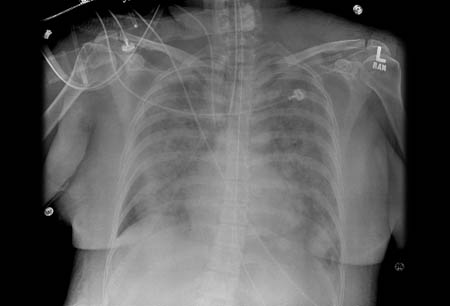
- chest x-ray
- ECG
Investigações a serem consideradas
- echocardiogram
- head CT scan
- EEG
Algoritmo de tratamento
asymptomatic: without criteria for emergency department evaluation
asymptomatic: with criteria for emergency department evaluation
symptomatic
Colaboradores
Consultores especialistas
Chris Hoyte, MD
Medical Toxicology Fellowship Program Director
Rocky Mountain Poison and Drug Safety
Denver
Professor
Department of Emergency Medicine
University of Colorado School of Medicine
Aurora
CO
Declarações
CH declares that he has no competing interests.
Eric Lavonas, MD, MS
Attending Physician
Department of Emergency Medicine and Rocky Mountain Poison and Drug Safety
Denver Health
Denver
Professor
Department of Emergency Medicine
University of Colorado School of Medicine
Aurora
CO
Declarações
EL is an author of a reference cited in this topic.
Agradecimentos
Dr Chris Hoyte and Dr Eric Lavonas would like to gratefully acknowledge Dr Kathryn A. Koch, a previous contributor to this topic.
Declarações
KAK declares that she has no competing interests.
Revisores
Colin A. Graham, MBChB, MPH, MD, FRCSEd, FRCSGlasg, FIMCRCSEd, FCCP, FCEM, FHKCEM, FHKAM
Editor
European Journal of Emergency Medicine
Professor of Emergency Medicine
Chinese University of Hong Kong
Hong Kong
People's Republic of China
Declarações
CAG is the editor of the European Journal of Emergency Medicine and receives an annual honorarium from Wolters Kluwer Health, the journal's publishers.
Gerald F. O'Malley, DO
Director
Division of Research
Department of Emergency Medicine
Albert Einstein Medical Center
Philadelphia
PA
Declarações
GFOM declares that he has no competing interests.
Paul Wax, MD
Clinical Professor of Surgery (Emergency Medicine)
University of Texas Southwestern Medical Center
Dallas
TX
Declarações
PW is an author of a reference cited in this topic.
Créditos aos pareceristas
Os tópicos do BMJ Best Practice são constantemente atualizados, seguindo os desenvolvimentos das evidências e das diretrizes. Os pareceristas aqui listados revisaram o conteúdo pelo menos uma vez durante a história do tópico.
Declarações
As afiliações e declarações dos pareceristas referem--se ao momento da revisão.
Referências
Principais artigos
Palmer BF, Clegg DJ. Salicylate toxicity. N Engl J Med. 2020 Jun 25;382(26):2544-55. Resumo
Chyka PA, Erdman AR, Christianson G, et al. Salicylate poisoning: an evidence-based consensus guideline for out-of-hospital management. Clin Toxicol (Phila). 2007;45(2):95-131.Texto completo Resumo
American College of Medical Toxicology. Guidance document: management priorities in salicylate toxicity. J Med Toxicol. 2015 Mar;11(1):149-52.Texto completo Resumo
Dargan PI, Wallace CI, Jones AL. An evidence based flowchart to guide the management of acute salicylate (aspirin) overdose. Emerg Med J. 2002 May;19(3):206-9.Texto completo Resumo
Artigos de referência
Uma lista completa das fontes referenciadas neste tópico está disponível para os usuários com acesso total ao BMJ Best Practice.
Diagnósticos diferenciais
- Diabetic ketoacidosis
- Dementia
- Pneumonia
Mais Diagnósticos diferenciaisDiretrizes
- Salicylates poisoning
- Salicylate poisoning: an evidence-based consensus guideline for out-of-hospital management
Mais DiretrizesCalculadoras
Anion Gap
Mais Calculadoras Conectar-se ou assinar para acessar todo o BMJ Best Practice
O uso deste conteúdo está sujeito ao nosso aviso legal