Summary
Definition
History and exam
Key diagnostic factors
- oliguria or anuria
- hypotension
- tachycardia
Other diagnostic factors
- poor oral intake and anorexia
- malaise
- thirst
- dizziness
- orthopnea/dyspnea
- edema
Risk factors
- chronic kidney disease (CKD)
- chronic hypertension
- diabetes mellitus
- advanced age
- low-perfusion states
- sepsis
- major surgery
- exposure to nephrotoxic agents
- exposure to radiocontrast media
- exposure to endogenous toxins
Diagnostic investigations
1st investigations to order
- basic metabolic profile (including BUN and creatinine)
- BUN-to-creatinine ratio
- urine sodium concentration
- urine osmolality
- fractional excretion of sodium
- fractional excretion of BUN
- urinalysis for sediment
- CBC
- coagulation studies
- urinary myoglobin
Investigations to consider
- ABG
- ultrasound
- ECG
- inferior vena cava (IVC) diameter measured by ultrasound
- kidney biopsy
Emerging tests
- serum and urinary biomarkers
Treatment algorithm
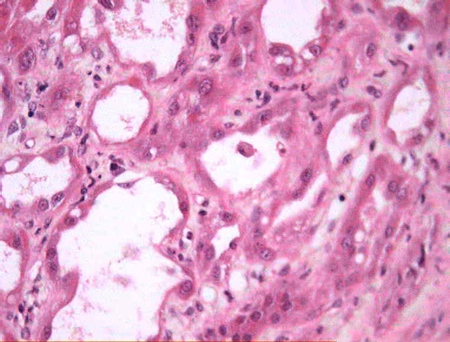
acute tubular necrosis (ATN)
Contributors
Authors
Bernard G. Jaar, MD, MPH
Clinical Director
Johns Hopkins University
School of Medicine
Division of Nephrology
Department of Medicine
Baltimore, MD
Disclosures
BGJ serves as an author for UpToDate (Nephrology) and receives royalties from them.
Acknowledgements
Dr Bernard G Jaar would like to gratefully acknowledge Dr Maria Jesus Lloret Cora, Dr Leonor Fayos de Arizon, and Dr Roser Torra, the previous contributors to this topic.
Disclosures
MJLC, LFdA, and RT declare that they have no competing interests.
Peer reviewers
Ajay Kumar, MD, FACP
Medical Director
Blood Management
Cleveland Clinic
Cleveland, OH
Disclosures
AK has received a fee for speaking about perioperative blood management from Ortho-Biotech, and has also received reimbursement from medscape.com for the education webcast of the same presentation.
Irfan Moinuddin, MD
Assistant Professor
Chicago Medical School
Rosalind Franklin University
Lombard, IL
Disclosures
IM declares that he has no competing interests.
Robert Tompkins, MD
Associate Professor
Department of Family Medicine
University of Texas Health Science Center
Tyler
TX
Disclosures
RT declares that he has no competing interests.
Peer reviewer acknowledgements
BMJ Best Practice topics are updated on a rolling basis in line with developments in evidence and guidance. The peer reviewers listed here have reviewed the content at least once during the history of the topic.
Disclosures
Peer reviewer affiliations and disclosures pertain to the time of the review.
References
Key articles
Kidney Disease: Improving Global Outcomes (KDIGO) Acute Kidney Injury Work Group. KDIGO clinical practice guideline for acute kidney injury. Kidney Inter Suppl. 2012 Mar;2(1):1-138.Full text
Gill N, Nally JV Jr, Fatica RA. Renal failure secondary to acute tubular necrosis: epidemiology, diagnosis, and management. Chest. 2005 Oct;128(4):2847-63. Abstract
National Institute for Health and Care Excellence. Acute kidney injury: prevention, detection and management. Oct 2024 [internet publication].Full text
Reference articles
A full list of sources referenced in this topic is available to users with access to all of BMJ Best Practice.
Differentials
- Prerenal azotemia
- Intrinsic renal azotemia
- Postrenal azotemia
More DifferentialsGuidelines
- KDIGO clinical practice guideline for acute kidney injury
More Guidelines Log in or subscribe to access all of BMJ Best Practice
Use of this content is subject to our disclaimer