Summary
Definition
History and exam
Key diagnostic factors
- change in mental status
- tachycardia
- hypotension
- mydriasis
- warm, dry, flushed skin
- change in mental status
- decreased or absent bowel sounds
- urinary retention
- ophthalmic signs
- neurological signs
Other diagnostic factors
- features of serotonin syndrome
Risk factors
- history of depression
- obsessive-compulsive disorder
- chronic pain
- attention deficit hyperactivity disorders
Diagnostic tests
1st tests to order
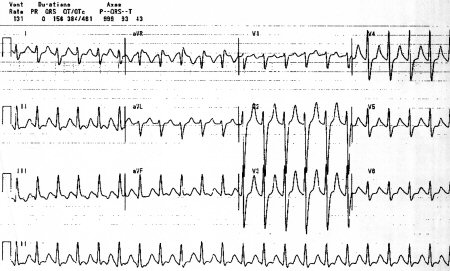
- ECG
- sodium bicarbonate therapeutic trial
- ABG
Tests to consider
- serum TCA concentrations
- serum acetaminophen concentrations
- serum salicylate concentrations
- urine drug screen
Treatment algorithm
suspected or confirmed TCA overdose
Contributors
Authors
Alastair Newton, MB ChB, FCEM
Staff Specialist in Emergency Medicine
Emergency Department
The Prince Charles Hospital
Brisbane
Queensland
Australia
Disclosures
AN declares that he has no competing interests.
Acknowledgements
Dr Alastair Newton would like to gratefully acknowledge Dr Catherine Kelly and Dr Robert S. Hoffman, previous contributors to this topic. CK and RSH declare that they have no competing interests.
Peer reviewers
Edward Boyer, MD
Lecturer Pediatrics
The Children's Hospital
Boston
MA
Disclosures
EB declares that he has no competing interests.
Ruben Thanacoody, MD, FRCP(Edin)
Consultant Physician and Clinical Toxicologist
National Poisons Information Service (Newcastle)
Newcastle-upon-Tyne
UK
Disclosures
RT declares that he has no competing interests.
Laurie Prescott, MD, FRCP (Lond), FRCP (Edin), FFPM, FRSE
Emeritus Professor of Clinical Pharmacology
University of Edinburgh and Western General Hospital
Edinburgh
UK
Disclosures
LP declares that he has no competing interests.
Peer reviewer acknowledgements
BMJ Best Practice topics are updated on a rolling basis in line with developments in evidence and guidance. The peer reviewers listed here have reviewed the content at least once during the history of the topic.
Disclosures
Peer reviewer affiliations and disclosures pertain to the time of the review.
References
Key articles
Woolf AD, Erdman AR, Nelson LS, et al. Tricyclic antidepressant poisoning: an evidence-based consensus guideline for out-of-hospital management. Clin Toxicol (Phila). 2007;45:203-233. Abstract
Body R, Bartram T, Azam F, et al. Guidelines in Emergency Medicine Network (GEMNet): guideline for the management of tricyclic antidepressant overdose. Emerg Med J. 2011;28:347-368. Abstract
Lavonas EJ, Akpunonu PD, Arens AM, et al. 2023 American Heart Association focused update on the management of patients with cardiac arrest or life-threatening toxicity due to poisoning: an update to the American Heart Association guidelines for cardiopulmonary resuscitation and emergency cardiovascular care. Circulation. 2023 Oct 17;148(16):e149-84.Full text Abstract
American Heart Association. Guidelines for cardiopulmonary resuscitation and emergency cardiovascular care. 2020 [internet publication].Full text
Reference articles
A full list of sources referenced in this topic is available to users with access to all of BMJ Best Practice.
Differentials
- Overdose of sodium channel blockers
- Conditions causing right axis ECG deviation
- Anticholinergic overdose
More DifferentialsGuidelines
- 2023 Focused update on the management of patients with cardiac arrest or life-threatening toxicity due to poisoning
- Adult advanced life support
More Guidelines Log in or subscribe to access all of BMJ Best Practice
Use of this content is subject to our disclaimer